

As a concrete batching plant exporter with years of experience in the East African market, we have witnessed the evolving equipment demand driven by Kenya's infrastructure boom. Driven by the "Vision 2030" policy, Kenya's road upgrades, affordable housing, and industrial park projects continue to generate demand, with China concrete batching plants capturing over 80% of the new market share due to their high cost-effectiveness. Many buyers often directly ask "what is concrete batching plant price in Kenya?", but considering local Kenyan conditions, customs policies, and specific requirements, equipment prices are not a single quote but rather a complete landing cost system.
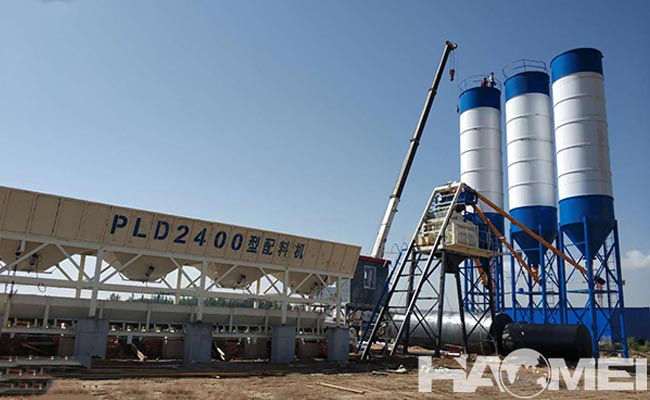
From the export FOB pricing benchmark, the three best-selling models in the Kenyan market have clear price gradients, highly matching the local project levels. Mobile concrete batching plants, accounting for 65% of the market share, are the first choice for small and medium-sized projects. The basic model with a capacity of 25-50 m³/h has an FOB price of $22,000-$42,000, requiring no complex foundation construction, offering flexible relocation, and perfectly adapting to Kenya's scattered small construction sites and rural infrastructure projects. Stationary concrete batching plants are concentrated in large and medium-sized projects along the Mombasa-Nairobi corridor. The FOB price of HZS60-HZS90 concrete plant models ranges from US$58,000 to US$115,000. These concrete batching plant plants offer stable production capacity and a high degree of automation, and are primarily used in municipal roads and commercial real estate projects. Meanwhile, HZS120 concrete batching plant and larger models, procured for large-scale national projects, have a standard FOB price of US$160,000 to US$280,000. These plants can meet the demands of continuous, high-intensity construction and are commonly found in key projects such as railways and ports.
Many buyers easily overlook the land-based costs beyond FOB, which is the core reason for the difference in total price after arrival at the port and is a cost item that exporters must clearly explain to their customers. Firstly, there are customs duties and clearance fees. In Kenya, the combined import duties and VAT on construction machinery and equipment amount to approximately 25%-30% of the value of the goods. Secondly, there are the land transportation and hoisting costs from Mombasa port to the inland construction site, ranging from approximately US$3,000 to US$8,000 depending on the distance. More importantly, there's the cost of adapting to different operating conditions: Kenya experiences high temperatures and frequent sandstorms year-round, requiring equipment upgrades to dustproof sealing systems and high-temperature resistant electrical components. In some remote areas without stable power supply, diesel generator sets are necessary. This adds 5%-10% to equipment costs, but it's a crucial investment to ensure stable operation in those areas, and it's also the part most easily omitted in low-priced, cost-cutting equipment.
Taking the HZS50 concrete batching plant purchased for a residential project near Nairobi as an example, the complete cost breakdown can be clearly seen. The standard configuration chosen for this project had an FOB price of US$36,000, including a JS1000 twin-shaft main unit, a three-compartment batching machine, and a 100-ton cement silo, meeting a daily production demand of 200 m³. Adding the sea freight and customs clearance costs from China to Mombasa (approximately US$11,000), land transportation from Nairobi and on-site hoisting (US$2,500), and upgrades for dustproof kits, high-temperature resistant electrical components, and spare wear parts (US$1,800), the final total cost is approximately US$51,300. This is the mainstream budget for medium-sized real estate projects in the Kenyan market.
Based on our years of export delivery experience, the Kenyan market is rife with low-priced, downgraded equipment. Some models, priced more than 20% below industry benchmarks, often simplify metering sensors and wear-resistant liners. In high-dust environments, this can increase the failure rate by more than 40%, significantly raising subsequent maintenance costs. We recommend prioritizing concrete batching plant manufacturers which have over 20 years experience, and upgrading standard configurations with dustproof and wear-resistant components, rather than blindly lowering equipment prices, to reduce total lifecycle maintenance costs.
In summary, the concrete batching plant price in Kenya needs to be comprehensively calculated based on the machine model, its suitability for the operating conditions, and the implementation process. Matching project timelines and capacity requirements with a configuration solution tailored to the local environment is the optimal solution for engineering procurement in Kenya.
About Us
| News
| Products
| Download
| Contact Us
Our job is much more than being construction equipment-concrete batching plant manufacturers,We are responsible to all the people who are concerned with this road and building construction industry and we strive to provide the best quality, price and services.
Address: No.14 Waihuan Road, New district, Zhengzhou, China.


