

Mini concrete batching plants (capacity 25-50 m³/h) are core equipment for rural infrastructure, small-scale municipal engineering, precast component plants, and short-term projects. The mini concrete plant price is influenced by multiple factors, including model, configuration, and certifications. As a technical manager at Haomei Machinery with over ten years of experience in export manufacturing, and based on the 2026 global market situation, this article breaks down the pricing system of mini concrete batching plants from a professional perspective, detailing the cost structure using the HZS35 model as an example, providing a rational reference for overseas procurement.
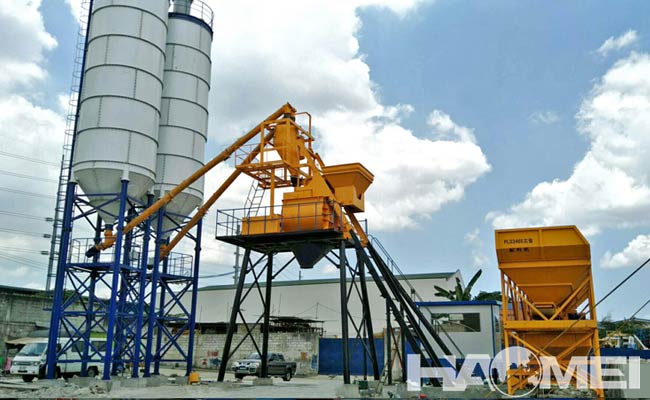
Mini concrete plants are divided into two categories: stationary (HZS series) and mobile (YHZS series). The basic price range is as follows:
- HZS25 (25m³/h):
Standard configuration $18,000-$28,000, High-end version (including imported sensors and automatic lubrication) $28,000-$35,000
- HZS35 (35m³/h):
Standard configuration $21,000-$30,000, High-end version $30,000-$37,000
- HZS50 (50m³/h):
Standard configuration $28,000-$40,000, High-end version $40,000-$48,000
- Mobile models with the same capacity:
Price increased by $3,000-$5,000 The price difference, due to the addition of a trailer chassis, quick-release structure, and hydraulic outriggers, lies primarily in the main unit configuration, metering accuracy, level of automation, environmental standards, and international certifications, rather than simply differences in production capacity.
Taking Haomei Machinery's HZS35 concrete batching plant, which has the largest export volume, as an example, the cost structure of the standard configuration at $26,500 is as follows:
- Core Main System (45%, approximately $11,925):
Employs a JS750 twin-shaft forced mixer, with high-chromium wear-resistant alloy for the mixing arms and liners. Each batch mixes 0.75m³, ensuring concrete homogeneity and equipment lifespan.
- Ingredient Metering System (25%, approximately $6,625):
PLD1200 three-bin batching machine, aggregate metering accuracy ±2%, cement/fly ash metering accuracy ±1%, using high-quality domestic sensors and pneumatic actuators.
- Conveying and Storage System (15%, approximately $3,975):
Includes an 8m belt conveyor, a 100-ton cement silo, a screw conveyor, and a dust removal device, meeting basic material storage and conveying needs.
- Electrical Control System (10%, approximately...) $2,650):
Semi-automatic PLC control cabinet, equipped with a 7-inch touchscreen, supports manual/automatic switching, and features fault alarm and production data recording functions.
- Other (5%, approximately $1,325):
Includes installation accessories, consumable parts package, and basic technical documentation.
- High-end version ($33,000):
Differences include: Italian Bonfiglioli reducer, German Siemens PLC, imported weighing sensors, added automatic lubrication system and remote monitoring module, suitable for projects with high precision and stability requirements.
Key factors that affect the mini concrete plant price including:
- Configuration Upgrade Premium:
Upgrading from semi-automatic to fully automatic increases the price by 12%-18%; environmental protection configurations (fully enclosed structure, bag filter) add $3,000-5,000; CE/ISO international certification adds $2,000-3,500.
- Purchasing Misconception Warning:
HZS25 models priced below $15,000 are often simplified configurations with poor metering system accuracy and short wear parts lifespan, resulting in long-term maintenance costs increasing by over 30%.
- Selection Recommendations:
For short-term projects, choose mobile models ($31,000-$35,000) for flexible relocation; for long-term fixed-site projects, choose fixed models for better cost-effectiveness; tropical/high-salt environments require additional anti-corrosion treatment, increasing the price by 8%-12%.
The mini concrete plant price follows the principle of "configuration-based pricing and demand matching," with the mainstream range in 2026 expected to be $18,000-$48,000. When purchasing equipment, project schedules, production requirements, local standards, and budgets should be considered to avoid blindly pursuing low prices or high configurations. Haomei Machinery suggests prioritizing brands with comprehensive after-sales service. Standard configurations can meet the needs of 80% of small-scale projects, with targeted upgrades for special working conditions to achieve optimal cost-effectiveness throughout the equipment's lifecycle.
About Us
| News
| Products
| Download
| Contact Us
Our job is much more than being construction equipment-concrete batching plant manufacturers,We are responsible to all the people who are concerned with this road and building construction industry and we strive to provide the best quality, price and services.
Address: No.14 Waihuan Road, New district, Zhengzhou, China.


